
How Do You Go From “I Hate the Dentist“ to “I Love Mine“? Our Patients Tell Us
Dock Dental Team | June 19, 2026 | 5 min read
“I hate going to the dentist.” It’s one of the most common things people say when they book their first appointment with us. Not “I’m nervous” or “I haven’t been in a while” — hate. A strong word for a feeling that, for many people, has been building since childhood.
What’s interesting is what we hear from those same people a year or two later. Not just “it wasn’t that bad.” Something closer to “I actually love my dentist.” That shift — from dread to something genuinely positive — is one of the most rewarding for us. And it’s not accidental.
It Starts With Feeling Like a Person, Not a Patient
The most common thread in how people describe a dentist they love isn’t the technology or the location or even the absence of pain. It’s something simpler: they felt like the dentist actually knew them.
That means being remembered — not just your dental history, but the fact that you were anxious last time, or that you mentioned you were going through a stressful period, or that you take your lunch break at 1pm and always need to be out by 1:45. It means not being made to feel judged for how long it’s been since your last visit. It means getting honest advice rather than a treatment plan that feels like a sales pitch.
There’s a particular kind of dentist-patient relationship that turns a reluctant visitor into a loyal one, and it’s built on the same things that make any relationship work — consistency, honesty, and the sense that the other person is genuinely on your side. Dr.Shiwakoti, who has been practising this for over two decades says “treat people the way you’d want to be treated yourself.” As someone who describes herself as an anxious patient, she brings a level of empathy to the chair that’s hard to manufacture and passes the approach to here associates as well.
Fear Doesn’t Have to Be Part of It
Dental anxiety is real, and it’s more common than most people realise. For some patients it’s mild — a general reluctance, a tendency to cancel and rebook. For others it’s deeply held, rooted in a bad experience years ago that never quite left.
What changes minds is usually not reassurance but experience. Being talked through each step before it happens. Being given the sense that you are in control — that you can pause, ask questions, or take a breath without anyone sighing at you. Discovering that the bad experience you braced for simply didn’t come at all.
Modern anaesthetic and techniques mean that the vast majority of dental procedures, including ones people find most daunting, are far more comfortable than they expect. But technique alone isn’t enough. The pace of the appointment matters. The way questions are answered matters. The absence of judgment — for the anxiety itself, or for the state of your teeth — matters enormously. When those things are right, fear tends to quietly dissolve over time, visit by visit.
The Visit Itself Can Actually Be Something You Enjoy
Most dental practices used to feel very clinical the moment you walk in — harsh lighting, clinical surfaces, lines of chairs, that particular smell and overall heavy feeling. Before you’ve even sat down, your nervous system has already decided how to feel about the next hour.
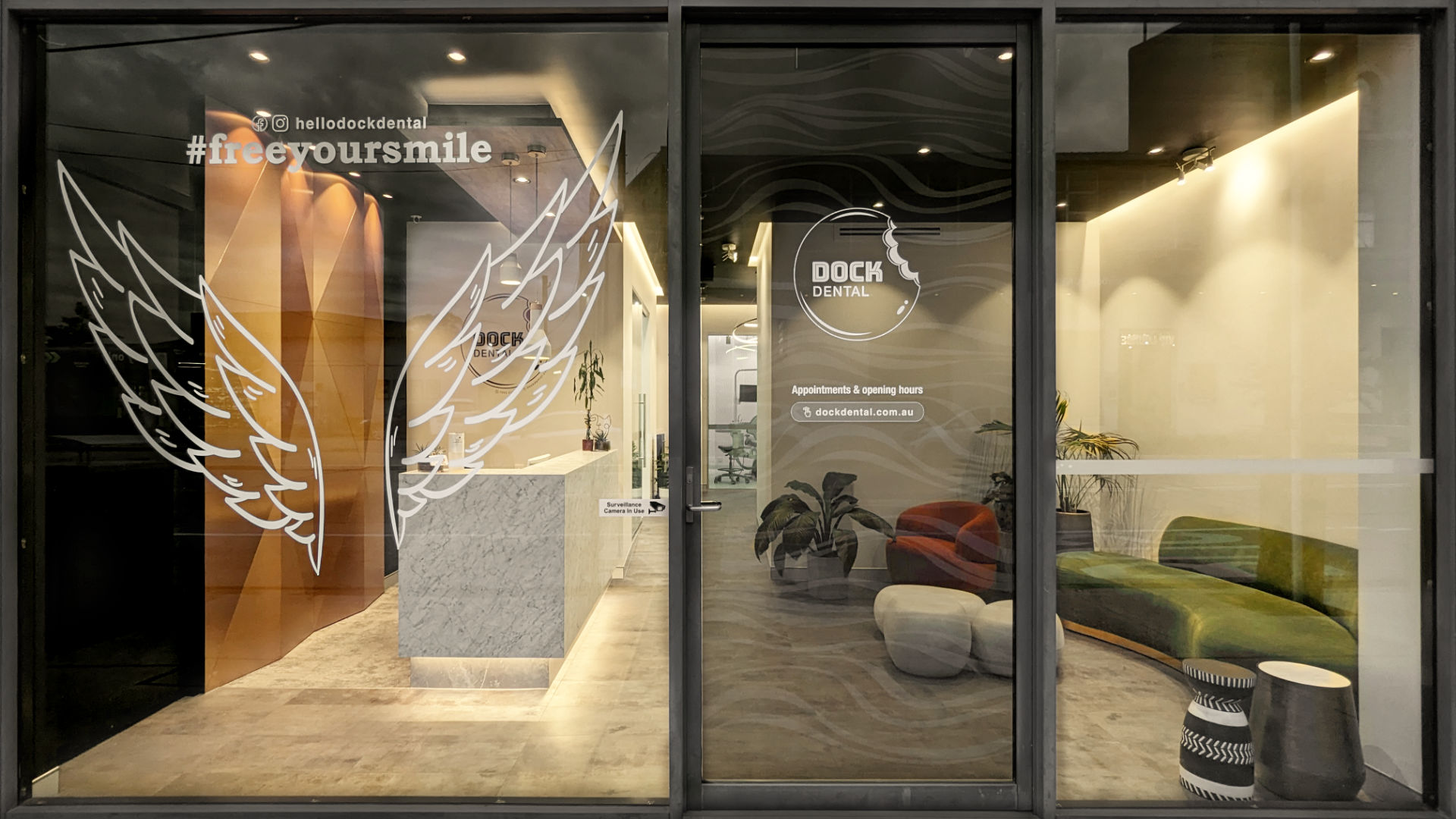
Most modern practices like Dock Dental understand that importance of environment and ambiance. They are designed to make you feel good the moment you walk in, similar to a spa or a well-designed café. Comfortable lounges, considered interiors, lighting that doesn’t feel like an interrogation, soft music — these things aren’t just cosmetic. They quietly tell your body it’s okay to relax.
Then there’s what happens once you’re in the chair. Unlike being in a hospital bed, patients get to choose what to watch on Netflix through noise-cancelling headphones during their appointment. That shift — from staring at a ceiling and listening to every screeching sound, to being genuinely absorbed in something you actually chose — is more significant than it sounds. You’re not enduring the visit. You’re just watching the next episode of whatever you’re currently into, and the appointment is happening around that, all the while you are being pampered with other things to keep you relaxed throughout.
The intention is the same one behind any experience designed around how people actually feel: you should leave in a better state than when you arrived. Not just relieved. Actually better. It’s closer to the logic of a spa visit than anything most people associate with dentistry — and that gap between expectation and experience is exactly what tends to change minds.
Technology That Changes What’s Actually Possible
The other reason a modern dental visit feels different is that the tools available now affect not just what a dentist can see and do, but how the whole appointment feels for the patient.
Take the scale and clean — one of the things people did not enjoy earlier. Airflow technology replaces the traditional scraping and polishing with a fine, pressurised jet of warm water, air, and powder that removes buildup without the vibration, the noise, or the discomfort. Patients who’ve had both tend to be quietly amazed. It’s faster, gentler, and oddly satisfying — less like a procedure, more like a refresh.
Intraoral scanning means no more of those uncomfortable impression trays filled with goop and those gags. A small handheld wand captures a precise digital model of your teeth in minutes, and you can watch it build on a screen in real time. That screen matters more than it might seem. Coupled with the intraoral cameras, you’re seeing exactly what your dentist sees — where a concern is, how it looks, what the options might be. It shifts the conversation from “trust me” to “look, here’s what’s going on.” For patients who’ve spent years feeling in the dark about their own dental health, that’s genuinely significant.
Then there’s CT imaging. Most people, if they’ve ever needed a detailed dental scan, have been handed a referral and sent to a radiology centre — another appointment to book, another day to take off work, a delay before treatment can even be planned. Having a cone beam CT in-house means that entire step disappears. Scans happen on the same visit, results are available immediately, and treatment can be discussed and planned without the wait. It’s a small logistical change that makes a meaningful practical difference, especially for more complex treatments like implants.
None of this is technology for its own sake. Each of these things removes something that used to make dental visits harder — a discomfort, an inconvenience, a reason to put it off.
You Leave Differently Than You Arrived
Perhaps the clearest sign that something has genuinely changed is what patients feel when they walk out.
The old experience ended with relief — relief that it was over, that you could now safely avoid thinking about it for another year. The new experience ends with something else. A clean mouth that you can feel. A clear sense of where things stand. Sometimes a small win — a problem caught early, a concern put to rest, a smile that looks noticeably better.
That’s what turns a reluctant patient into one who actually books their next appointment before they leave. Not because they have to, but because it was a good experience and they want to keep it up.
If you’re still firmly in the “I hate the dentist” camp, we’d genuinely love the chance to change your mind. Not with a hard sell — just with a visit that might surprise you.
Ready to give it another chance?
Book an appointment at Dock Dental in Five Dock and see what a modern dental visit actually feels like.
Book online or call us on 02 7253 0333.
The shift from “I hate the dentist” to “I love mine” doesn’t happen because of any single thing. It’s the accumulation of feeling known, feeling comfortable, feeling like the visit was actually worth your time. We see it happen regularly, and it never gets old.
If you’re based anywhere across Sydney’s Inner West — Five Dock, Abbotsford, Concord, Russell Lea, Chiswick, or Canada Bay — we’re here and always happy to see new patients, nervous ones especially.
The ideas expressed in the above article are solely meant for general guidance to understand your conditions. While we have made attempts to ensure that the information contained are up to date, it should not be taken as a professional advice for your conditions. We cannot guarantee the accuracy and results of the suggested ideas for your conditions. Dock Dental or the author is not responsible for any errors or omissions, or for the results obtained from the use of the above information.
We strongly advise you to talk to your dentist about your condition to get a proper solution. If you do not have a regular dentist, you can also book an appointment online or call us at 02 7253 0333 to talk to our dentist.


